/)
/)
/)
/)
/)
/)
/)
/)
/)
/)
/)
/)
/)
/)
/)
/)
/)
/)
/)
/)
/)
optibelt TB DIN
Configure your product
Description
optibelt TB Taper-Bushing as a shaft-hub connecting element
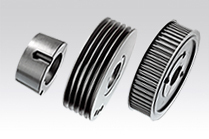
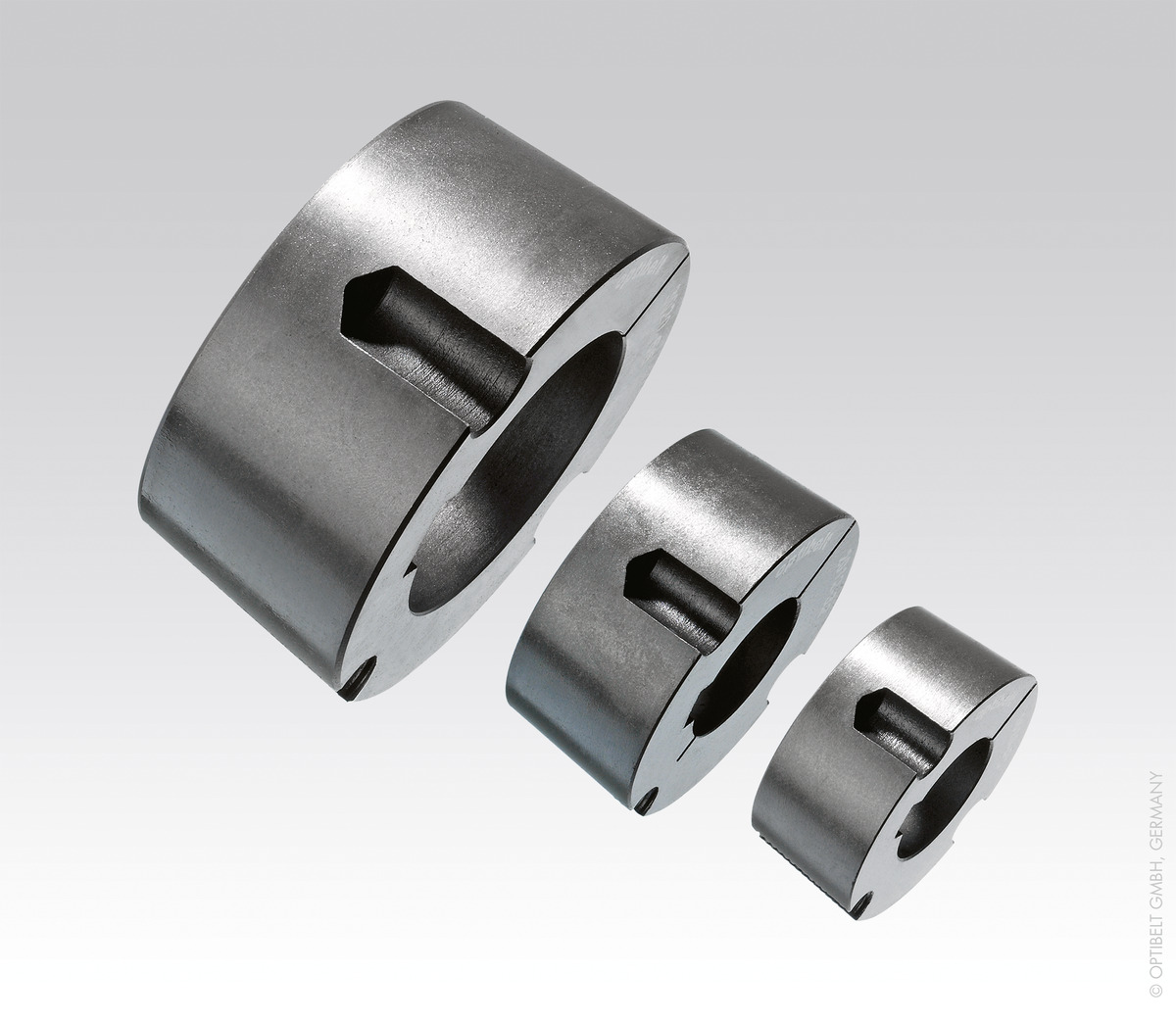
The optibelt TB Taper-Bushing is a shaft-hub connecting element. It is often referred to as a taper-clamping-bushing or taper-lock and, alongside the optibelt CE clamping elements, is primarily used for force-fit shaft-hub connections. As the best-known and most commonly used clamping bushing, it enables simple axial fixation of various machine components and ensures the secure transmission of torque between a shaft and a hub. Taper-Bushings have a conical outer surface and are used in conjunction with a hub manufactured in a tapered design. Due to the tightening torque of the fastening screws, the Taper-Bushing develops a clamping force between the shaft and the hub, thereby securing the machine component to a shaft. A slot in the body of the Taper-Bushing also ensures improved clamping. Taper-Bushings can be used with shaft tolerances up to h11 at a maximum diameter of 30 mm. Beyond that, the h9 tolerance applies.
Extensive standard product range for maximum flexibility
Optibelt offers an extensive standard product range of Taper-Bushings with high availability and a favorable price-performance ratio. Depending on the size, optibelt Taper-Bushings are available for shaft diameters ranging from 8 mm to a maximum of 200 mm. Separate drilling or grooving is no longer necessary, as the bushings are already equipped with internal metric and imperial bores in common shaft diameters, as well as a keyway in accordance with DIN 6885 Part 1 or BS 46 Part 1.
Taper-Bushings can be used for shafts with or without a keyway. Compared to conventional key connections, the Taper-Bushing system allows for a very short installation length. The machine component to be mounted is immediately ready for installation and use via the Taper-Bushing, which determines the shaft diameter. When using other shaft diameters, simply select and replace the Taper-Bushing with the desired bore. Our optibelt Taper-Bushings are supplied with the necessary mounting screws.
Depending on the size, these are set screws or cylinder screws with hexagon sockets and hexagon screws. To ensure that neither the Taper-Bushings nor the associated machine components are damaged and that a permanently reliable shaft-hub connection for torque transmission is guaranteed, the respective screw tightening torques must be observed in particular. The Taper-Bushings are delivered in attractive sales packaging, which includes detailed installation instructions.
We reserve to alter specifications without notice.
Details
The use of Taper-Bushings is considered
efficient, reusable and easy to install.
Suitable Product Solutions

/)
/)
/)
/)
/)
/)
/)
/)
/)
Services & Tools
CAD Service Tool
/)